

- Home
- Blog
- Giving Birth in Canada
- Is a Baby Born in Canada a Canadian Citizen? Why the Baby's Status and the Parents' Status Are Separate
Is a Baby Born in Canada a Canadian Citizen? Why the Baby's Status and the Parents' Status Are Separate
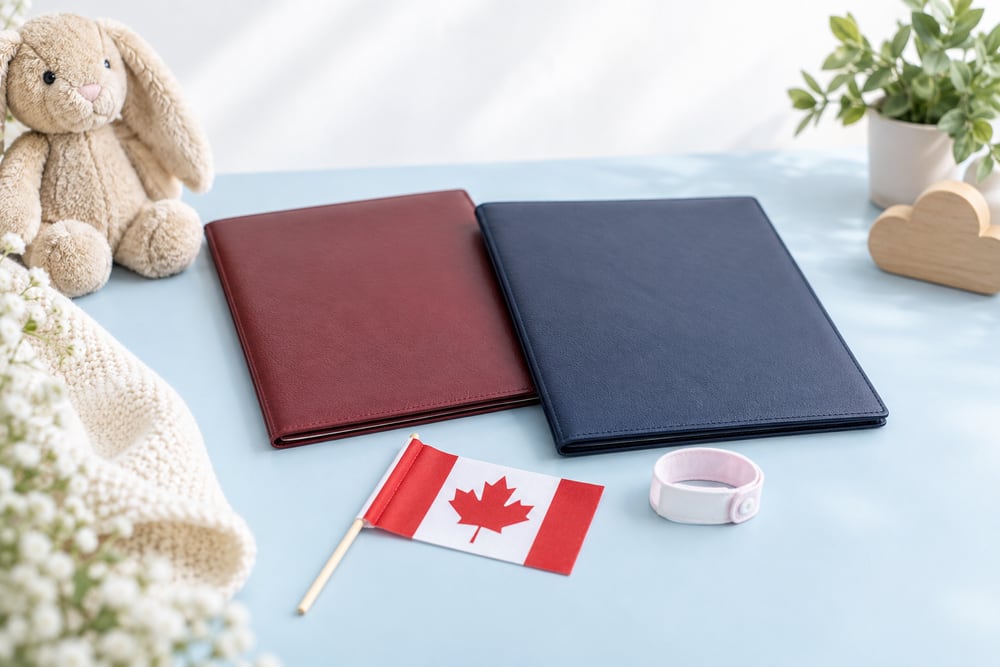
If you give birth in Canada, your baby will usually be a Canadian citizen. The Government of Canada says most people born in Canada are citizens, and a birth certificate issued by the province of birth is valid proof of citizenship. The exceptions include a baby whose parent, at the time of birth, was working in Canada for a foreign government and had diplomatic privileges. The baby's status and the parents' status are two separate matters. The baby is a citizen. The parents still stay under their own entry documents, and the birth does not give them residence, work, or immigration status.
“If our baby is born in Canada, is the baby Canadian? And what about us, the parents?” These two questions often come up together. The first one mostly has an answer. The second one tends to get skipped. Instead of asking “Will our baby have Canadian citizenship?”, start with: “Once the baby's status is settled, how do we plan each family member's documents and length of stay?” For the overall order of entry, costs, and postpartum accommodation, start with Giving Birth in Canada: What to Confirm First About Entry, Medical Care, Costs, Baby Documents, and Postpartum Plans.
The Short Answer: Will a Baby Born in Canada Have Canadian Citizenship?
- The baby: usually a Canadian citizen. According to Immigration, Refugees and Citizenship Canada (IRCC) guidance on citizenship, most people born in Canada are citizens. The exception the page gives is a parent with diplomatic privileges in Canada.
- The proof: a birth certificate from the province of birth. With a birth certificate, you do not need to apply separately for a citizenship certificate. To apply for a Canadian passport later, you will need the long-form birth certificate that lists the parents' names.
- The parents: your status does not change. Parents enter on their own visitor visa or eTA. A border services officer decides how long you can stay. Most visitors can stay up to 6 months.
- Dual citizenship: Canada recognizes it. Whether the baby also has Taiwanese or another nationality depends on the nationality law of the parents' country.
- Future trips to Canada: use a Canadian passport. Canadian citizens, including dual citizens, need a valid Canadian passport to fly to Canada. They also cannot apply for an eTA.
When Is a Baby Born in Canada Not a Canadian Citizen?
The Government of Canada's citizenship page gives only one example. If, at the time of the birth, a parent was working in Canada for a foreign government and had diplomatic privileges, the baby is not a Canadian citizen at birth. Families who come to Canada as visitors to give birth usually do not fall into this category, but in any actual case, IRCC's determination is what counts.
Here is how a few common situations compare:
| Situation | The Baby's Canadian Status at Birth | Who to Check With |
|---|---|---|
| The parents entered on a visitor visa or eTA, and the baby is born in a Canadian hospital | Usually a Canadian citizen | The birth registration office in the province of birth; IRCC if you have questions |
| A parent works in Canada for a foreign government and has diplomatic privileges | Not a Canadian citizen at birth, according to the Government of Canada | IRCC |
| The baby is born before departure or in transit, before reaching Canada | The “born in Canada” rule does not apply | The authorities of the country of birth and of the parents' country |
The third situation sounds rare, but it is worth keeping in mind if your departure date is set too late. For each airline's pregnancy limits, see Traveling to Canada While Pregnant: eTA, Visitor Visas, and Airline Pregnancy Limits.
Which Document Proves Your Baby's Canadian Status?
According to the Government of Canada, after the baby is born, the parents must register the birth with the province or territory where the baby was born, and the province or territory issues the birth certificate. That birth certificate is your baby's proof of Canadian citizenship.
Three documents are often confused. Here is how to tell them apart:
- Birth certificate: issued by the province of birth. It proves the baby is a Canadian citizen.
- Citizenship certificate: not required. According to IRCC's list of documents for a child's passport, a birth certificate from the province of birth is enough as proof of citizenship when you apply for a passport. The citizenship certificate is only an alternative. If your family needs one for another purpose, apply under IRCC's rules.
- Long-form birth certificate: lists the parents' names. Since November 5, 2024, every child passport application must include this kind of proof of parentage.
For how many birth certificates to order, which version to get, and the full sequence of passport and Taiwan return documents, see After Your Baby Is Born in Canada: Birth Registration, Birth Certificates, and Travel Documents.
If Your Baby Is a Canadian Citizen, Does Your Status as a Parent Change?
No. The Canadian citizenship your baby may acquire does not give the parents residence, work, or immigration status. How long parents can stay in Canada still depends on their own entry documents and the border services officer's decision.
How your length of stay is marked, and how far ahead to apply for an extension, are covered in Traveling to Canada While Pregnant: eTA, Visitor Visas, and Airline Pregnancy Limits.
Here is how this works in situations you may face:
- If you entered on an eTA and want to stay another month after the birth: You need to apply in your own name to extend your stay (a visitor record). Your baby's citizenship cannot take the place of this application.
- If your husband or other family members arrive a few weeks later: Each person's entry documents and length of stay are counted separately. Write down each person's expiry date on its own.
- If you want to look into working or living in Canada long-term: That is a separate immigration application. Consult a Canadian immigration lawyer or a licensed immigration consultant.
Will Your Baby Also Have Taiwanese Nationality? How Dual Citizenship Works
Canada recognizes dual citizenship. According to IRCC's explanation of dual citizenship, a person recognized as a citizen by two or more countries has dual citizenship.
Any other nationality depends on the law of the parents' country. Taking Taiwan as an example, Article 2 of the Nationality Act of the Republic of China (Taiwan) provides that a person whose father or mother was a national of the Republic of China at the time of the person's birth holds Republic of China nationality. Whether it applies to an individual case is determined by the Ministry of the Interior and Taiwan's overseas missions. Say the father is a Taiwanese national and the mother holds another country's passport. On the Canadian side, the birth certificate is what counts. On the Taiwan side, the question is decided under Article 2 of the Nationality Act. The mother's nationality is a separate question for her own country. Some countries do not recognize dual nationality. Families with Hong Kong, mainland Chinese, or other nationalities should check with the relevant overseas mission first.
Use this table to take each status question to the right place:
| What to Confirm | Who to Ask |
|---|---|
| The baby's Canadian citizenship and birth certificate | The birth registration office in the province of birth; IRCC |
| The baby's Canadian passport | IRCC (Canadian passport services) |
| The baby's Taiwan passport, household registration, and document authentication | The Taipei Economic and Cultural Office in Canada (Ottawa), or the Taipei Economic and Cultural Office in Toronto or Vancouver; household registration offices |
| Recognition of other nationalities and their passports | That country's embassy or consulate in Canada |
| Special cases, such as parents' names that do not match or marriage documents | A lawyer and the agency that will use the documents |
Which Passport Will Your Baby Use to Return to Canada Later?
You will only face this question when your child is older and the family goes back to Canada, so for now, just make a note of it. Under IRCC's travel rules for dual citizens, dual citizens who hold Canadian citizenship need a valid Canadian passport to board a flight to Canada or to transit through a Canadian airport. They cannot enter on another country's passport, and Canadian citizens cannot apply for an eTA.
For example, say your child is three and the family is taking a trip to Vancouver. The parents, on Taiwan passports, each apply for an eTA. The child needs a valid Canadian passport. Before you leave, check:
- Whether the child's Canadian passport is still valid
- Whether each parent's eTA or visa is valid
- Whether your itinerary includes a connection at a Canadian airport
If there is not enough time to get a passport, IRCC also has a special authorization for flights leaving within 10 days. The conditions are limited, so check the official page for details.
Which Part Can Jiaduobao (JDB) Help With?
JDB plans to expand its services to Canada starting in 2027, focusing on postpartum accommodation, recovery for mothers, and newborn care. Cities, opening dates, and service details will be posted over time in our announcement.
Visas, entry, medical care, and your baby's identity documents are handled separately by the Government of Canada, hospitals, and Taiwan's overseas missions. Jiaduobao provides accommodation, daily living, and newborn care services and does not provide individual visa, immigration, legal, or medical advice.
To learn more about our plans for Canada, contact us on LINE (ID: jdbmom828), WeChat (ID: jdbmom), WhatsApp (+1 828-866-8886), or through our online form.
Jiaduobao provides accommodation, daily living, and newborn care services and does not provide individual visa, immigration, legal, or medical advice.
Frequently Asked Questions
Q1: Does the Baby Need a Permanent Resident Card?
No. According to IRCC, a permanent resident is someone who has permanent resident status but is not a Canadian citizen, and the PR card is proof of permanent resident status. A baby born in Canada who is a Canadian citizen is not a permanent resident. The baby's status is proven with a birth certificate, and the baby travels abroad by air on a Canadian passport.
Q2: Do You Need to Apply for or Register Dual Citizenship With Canada?
No. IRCC explains that a person recognized as a citizen by two or more countries has dual citizenship. Canada has no application process or certificate for dual citizenship. Whether the other country recognizes it, and what registration it requires, is a question for that country's authorities.
Q3: Who Corrects a Parent's Name if It Is Wrong on the Birth Certificate?
The birth registration office in the province of birth. Birth records fall under each province and territory, and each has its own correction process and document requirements. A name error can affect the baby's passport application later, so check the birth certificate as soon as you receive it.
Q4: Can a Postpartum Care Center Advise on Your Baby's Nationality?
No. Nationality and citizenship are determined by each country's authorities. For individual cases, consult an immigration lawyer or a consular office. What a postpartum care center can do is arrange daily living and care, such as looking after mother and baby while you handle the paperwork.
For Families Considering Giving Birth in Canada
Your baby's nationality is often the first question a family asks, and the one they most want answered. The answer is usually yes, but it covers only the baby's half. The parents' length of stay, the passport the baby will use later, and Taiwanese or other nationality each need to be confirmed separately. Sort these out one at a time and write down each expiry date. Then, in the first few weeks after the birth, you will not be catching up on paperwork while caring for your baby.
If you are considering giving birth in Canada and would like to talk about postpartum care plans, you can contact JDB through our contact form.
Sources
- Government of Canada (IRCC): Check if you may be a citizen. Citizenship of people born in Canada, birth certificates, and the diplomatic privilege exception. The way the exception is described may be updated.
- Government of Canada (IRCC): Documents to submit when applying for a child's passport. Proof of citizenship and proof of parentage for a child's passport.
- Government of Canada (IRCC): Dual Canadian citizens need a valid Canadian passport. Passport rules for dual citizens flying to Canada. The conditions for special authorization may change.
- Government of Canada (IRCC): Understand permanent resident status. The definition of a permanent resident and what the PR card is for.
- Laws & Regulations Database of the Republic of China (Taiwan): Nationality Act. Article 2, on acquiring Republic of China nationality by birth.
This article is general information about Canadian citizenship and related documents. It is not legal, immigration, or case-specific advice. Rules and official guidance may change at any time. In any actual case, the official notices of the Government of Canada and other countries' authorities, applicable law, and professional advice take precedence.
Article Classification
Recent Articles
- Traveling to Canada While Pregnant: eTA, Visitor Visas, and Airline Pregnancy Limits
- How to Choose a Postpartum Care Center in Canada: Services, Costs, and a Medical Coordination Checklist
- After Your Baby Is Born in Canada: Birth Registration, Birth Certificates, and Travel Documents
- Giving Birth in Canada Step by Step: Prenatal Care, Hospitals, Labor, and the Trip Home
- How Much Does It Cost to Give Birth in Canada? A Budget Framework for Non-Resident Medical, Hospital, and Unexpected Costs